The world of circuit board manufacturing is complex and multifaceted. These techniques have evolved significantly over the years. A variety of methods now exist, each with its own strengths and weaknesses. Understanding these manufacturing techniques is crucial for anyone involved in electronics.
Circuit boards are essential components in almost all electronic devices. From smartphones to home appliances, their role is undeniable. This industry demands precision and reliability in production methods. Choosing the right manufacturing technique can impact performance, cost, and time to market.
However, the landscape is not without challenges. Factors such as material choice, production speed, and design intricacies create potential pitfalls. It’s essential to reflect on these aspects. A well-informed decision will ensure that manufacturers meet industry standards while delivering reliable products. This article delves into the top circuit board manufacturing techniques, exploring their advantages and limitations.
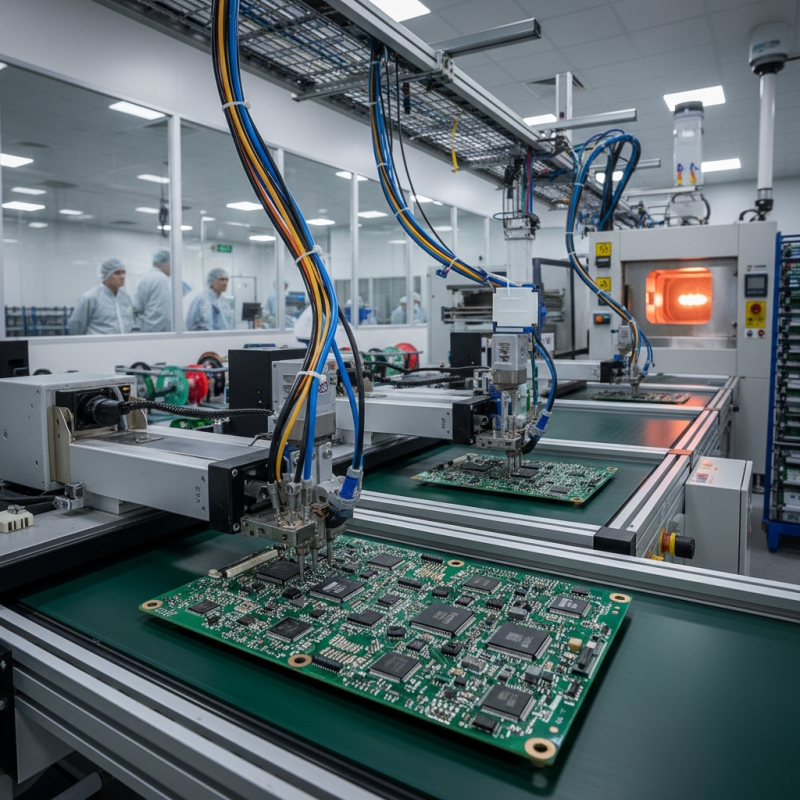
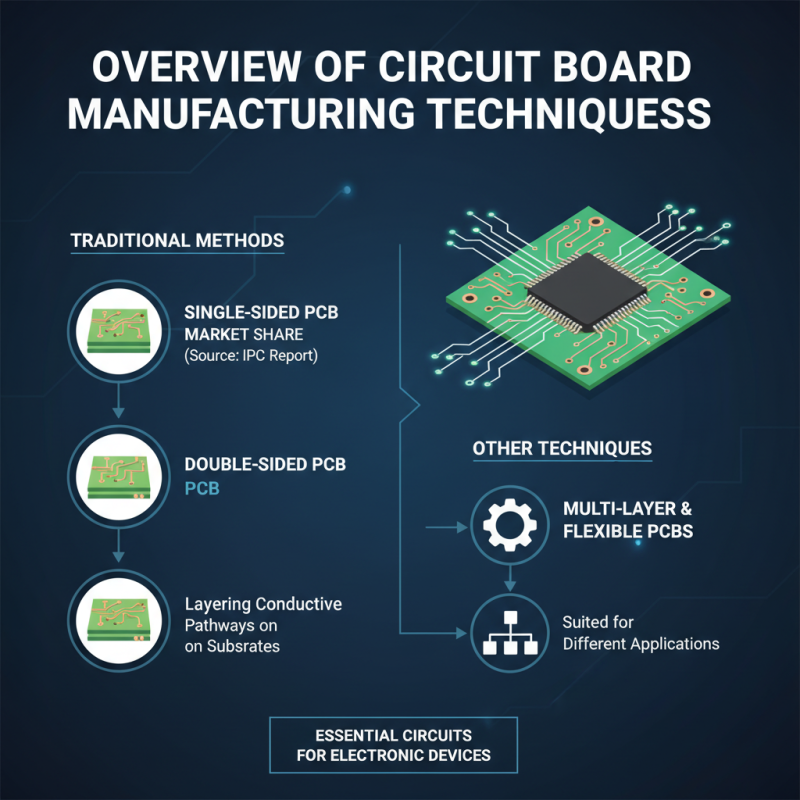
The circuit board manufacturing industry employs various techniques, each suited for different applications. Traditional methods, like single-sided and double-sided PCB fabrication, remain popular. These techniques involve layering conductive pathways on substrates, creating essential circuits for electronic devices. According to a report by IPC, single-sided PCBs account for approximately 40% of the global market share.
Recent advancements emphasize more complex designs. Multi-layer PCBs, capable of integrating multiple layers in a compact format, are essential for modern electronics. Research indicates that the multi-layer PCB market will grow at a CAGR of around 6.1% from 2021 to 2026. This growth highlights the increasing demand for miniaturized electronic devices, driving innovative materials and methods.
Despite these advancements, challenges persist. For instance, the intricacy of manufacturing techniques can lead to higher costs and longer production times. Quality control also becomes crucial, as small errors in layers can significantly impact performance. Industry experts emphasize that continual improvement in manufacturing processes is necessary to meet evolving consumer demands while maintaining reliability and efficiency.

In the world of circuit board manufacturing, understanding the distinction between subtractive and additive processes is crucial. Subtractive manufacturing removes material from a solid block to create the desired shape. This method is common in traditional PCB fabrication, which accounts for approximately 55% of the market. Techniques like chemical etching or milling are often employed here. The downside? Material waste can be significant, leading to higher production costs.
Conversely, additive manufacturing builds up layers of material to form the final product. This process has gained traction, representing about 25% of PCB production, and is celebrated for its efficiency. 3D printing technology has advanced, allowing for complex designs without excessive waste. However, the challenge remains in achieving high fidelity and adherence to specifications. Expert analyses indicate that by 2025, additive methods could reduce costs by up to 30%.
Tips: When selecting a manufacturing technique, consider your project's scalability. Additive processes may suit small runs, while subtractive may be better for larger volumes. Always conduct prototype testing to gauge performance and reliability before full production. Remember, even slight variations in material or process can lead to significant performance impacts.
In circuit board production, material selection plays a vital role. The most widely used material is fiberglass-reinforced epoxy. This material offers excellent durability and thermal stability. Additionally, it provides good electrical insulation. Another common choice is polyimide. It withstands high temperatures and is essential for flexible circuits.
Copper is the predominant metal used in circuit boards. It serves as the conductive layer, allowing electrical signals to travel. The thickness and quality of copper can significantly impact performance. Some manufacturers use gold plating for critical contacts, ensuring better conductivity and protection against corrosion.
There are, however, challenges in material selection. Not all materials are environmentally friendly or easy to source. Sometimes, the best performing materials come at a higher cost. Additionally, not all materials are suitable for every application, leading to potential inefficiencies. It is important to critically evaluate options based on specific needs. Balancing performance, cost, and environmental impact remains a challenge for many in the industry.
This chart illustrates the most common manufacturing techniques used in circuit board production, showcasing their percentage usage in the industry.
Circuit board fabrication involves various key technologies that enhance both performance and efficiency. Each method has its strengths and weaknesses. Understanding these can lead to better design choices. For instance, photolithography is widely used for fine patterning. It involves coating a board with a photosensitive layer, then exposing it to UV light through a mask. This technique enables the creation of complex circuits but can be costly and time-consuming.
Another important technology is CNC milling, where cutting tools remove excess material. This method offers high precision and flexibility. It allows for rapid prototyping and quick modifications, yet it may not be suitable for large-scale production. Manufacturers often find a balance between these techniques. They must consider factors like cost, material limitations, and the intended application of the board.
Surface mount technology (SMT) has also gained prominence. It allows components to be placed directly on the surface of the board, saving space and increasing manufacturing speed. Still, achieving proper soldering can be challenging. Misalignment issues can lead to defective products. Each of these technologies has unique implications, impacting both reliability and overall quality.
| Manufacturing Technique | Description | Common Applications | Advantages | Disadvantages |
|---|---|---|---|---|
| Subtractive Manufacturing | A method where copper is etched away from the substrate to create circuit patterns. | Consumer electronics, automotive | High precision, established technology | Material waste, longer lead times |
| Additive Manufacturing | Involves adding layers of material to form circuit patterns, allowing for complex designs. | Medical devices, high-frequency applications | Less material waste, design flexibility | Relatively new, may have production speed issues |
| Flexible Circuit Board Manufacturing | Production of circuit boards that can bend, fold, and twist. | Wearable technology, aerospace | Space-saving, lightweight | Higher production costs, durability concerns |
| Multilayer Circuit Board Manufacturing | Involves stacking multiple layers of circuits to save space and enhance functionality. | Complex electronic devices, telecommunications | High density, versatile | Complex manufacturing process, potential reliability issues |
| Screen Printing | Used to apply conductive inks onto substrates, ideal for prototype production. | Prototyping, low-volume runs | Cost-effective for small batches, simple setup | Limitations in resolution, not suitable for mass production |
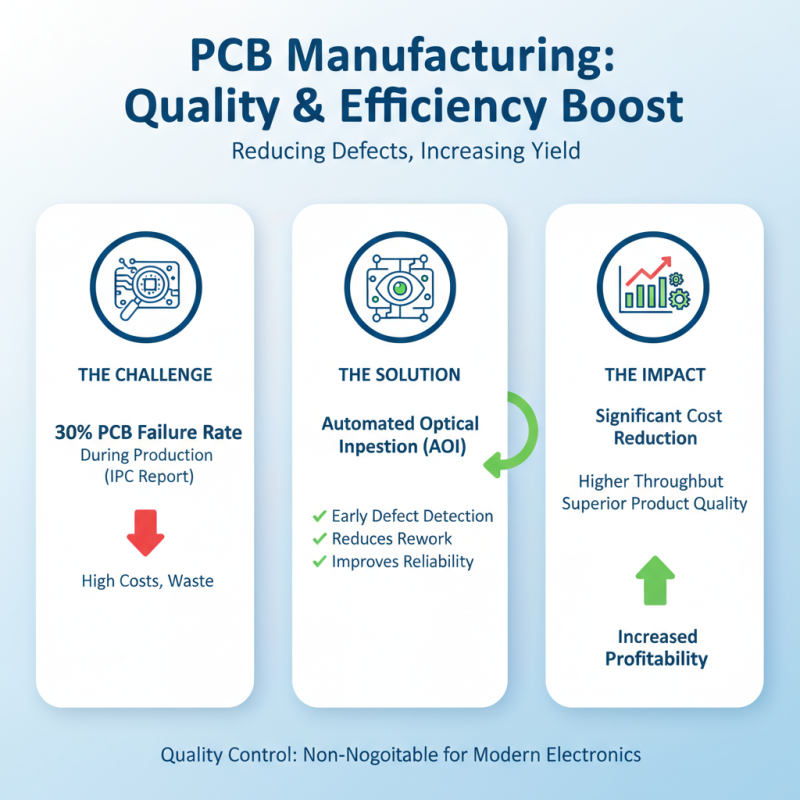
Quality control and testing are crucial in PCB manufacturing. A report from IPC shows that around 30% of PCBs fail during production. This highlights the need for effective quality management. Techniques like Automated Optical Inspection (AOI) are commonly used. AOI detects defects early, reducing waste and improving yield. Proper inspection can lead to a significant decrease in production costs.
Testing methods also include Functional Testing and In-Circuit Testing (ICT). Functional Testing verifies the PCB functions as intended. ICT checks for component placement and solder integrity. Industry data indicates that using both methods can enhance defect detection rates by up to 40%. Companies often overlook these steps, risking product reliability.
Tips: Always document test results. Regular audits help maintain quality standards. Consider investing in staff training to improve skills. A well-trained team can better manage testing processes. Regular reviews of equipment can also uncover hidden issues, preventing future failures. Balancing speed and quality is essential. Ensure all testing equipment is up to standard. A failure in this area can lead to costly recalls.